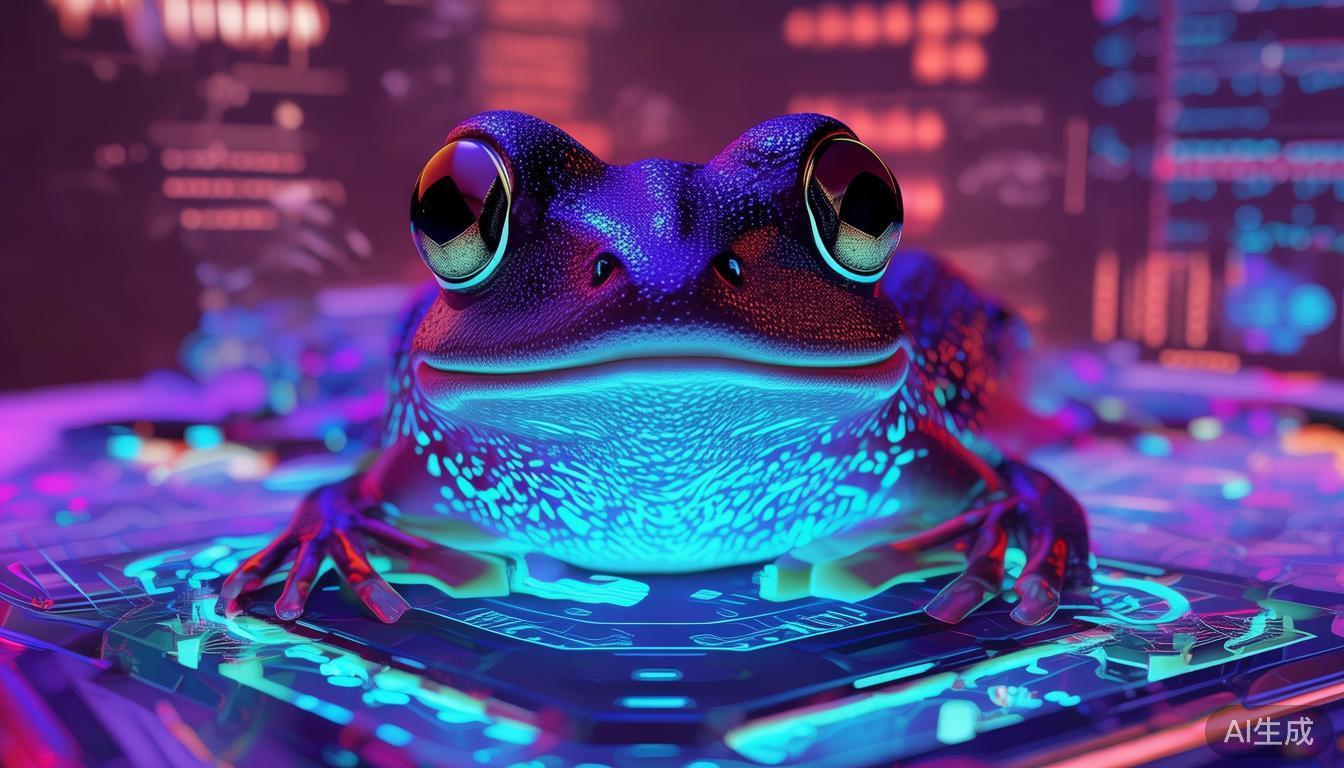
AI基准艺术:用哈布斯堡下颌生成青蛙
在飞速发展的人工智能领域,基准测试是衡量进展、比较模型和理解这些系统能力与局限性的关键工具。一个特别有趣且富有洞察力的基准测试源自 Hacker News 的讨论,其挑战简单却出乎意料地复杂:生成一个带有哈布斯堡下颌的青蛙SVG。这项看似轻松的任务突显了人工智能生成内容的微妙挑战以及提示词明确性的重要性。
挑战:带有哈布斯堡下颌的SVG青蛙
虽然这个请求有些异想天开,但它深入探讨了人工智能图像生成的复杂性。其核心在于测试人工智能的以下能力:
-
理解和诠释抽象概念:"哈布斯堡下颌"在生物学或解剖学术语中并非标准术语。它指的是突出的下颌,通常与欧洲历史上的皇室成员相关联。人工智能必须识别这个术语并将其转化为视觉表现,从而在抽象语言和具体图像之间架起桥梁。
-
生成矢量图形:对SVG(可缩放矢量图形)的要求增加了另一层复杂性。与由像素组成的位图不同,SVG是使用数学方程式定义的。这意味着人工智能不仅要生成一个可识别的青蛙,还要确保输出在任何分辨率下都清晰可缩放。
-
保持连贯性和细节:生成一个青蛙是一回事;在保持主体整体完整性的同时生成一个具有特定非标准特征的青蛙是另一回事。人工智能必须避免创建一个不合理的混合体,或以一种使图像无法识别的方式错误地表现青蛙。
这为何重要:语言、视觉与创造力的交汇
这个基准测试不仅仅是一个有趣的练习;它是洞察人工智能如何处理和生成内容的窗口。其重要性体现在以下几个方面:
语言理解和综合
人工智能模型,特别是基于Transformer架构的模型,依赖于庞大的数据集来理解和生成文本。然而,词语和短语的含义并不总是直截了当的。"哈布斯堡下颌"这一术语要求人工智能:
- 识别术语:确定"哈布斯堡下颌"指的是一种特定的面部结构。
- 语境化含义:理解该术语被应用于青蛙,而青蛙在生物学上与人类不同。
- 可视化概念:将抽象思想转化为视觉表现,确保特征与主体相符。
这个过程突显了人工智能交互中明确语言的重要性。歧义可能导致误解,正如人工智能生成不切实际或荒谬图像的潜在可能性所示。
矢量图形生成
SVG是许多应用的关键格式,包括网页设计、图标和可缩放插图。生成SVG需要人工智能:
- 使用数学基元:利用矢量(点、线、曲线)来定义图像。
- 保持可缩放性:确保图像无论大小都保持清晰锐利。
- 融入细节:添加精细的线条和形状,以捕捉青蛙特征的细微之处,包括哈布斯堡下颌。
这个基准测试的方面突显了人工智能在创建高质量、可缩放图形方面的技术挑战。与位图不同,位图在放大时会变得模糊,SVG保持清晰,因此这是人工智能图像生成器的一项关键技能。
创造力与约束
从本质上讲,这个基准测试测试了人工智能在约束条件下进行创造的能力。提示词既具体(青蛙、哈布斯堡下颌)又开放(如何表现它)。人工智能必须平衡这些元素,以生成以下内容:
- 可识别性:图像仍然应能被识别为青蛙。
- 独特性:哈布斯堡下颌应是一个可识别的特征。
- 美观性:整体设计应连贯且视觉上吸引人。
这突显了人工智能中创造力和技术技能的交汇点。能够生成图像的模型是一回事;能够在一个定义好的格式内生成特定、细致的图像的模型是另一回事。
分析结果:我们能学到什么
虽然原始的Hacker News讨论没有提供确切的输出,但我们可以推断几种潜在结果及其揭示的人工智能能力:
潜在结果和见解
-
字面解释:人工智能可能会将"哈布斯堡下颌"字面化,创造一个具有夸张的、类似哈布斯堡君主画像中下颌线的青蛙。这会展示人工智能解释抽象术语的能力,但可能导致一个比现实更幽默的图像。
-
生物学解释:或者,人工智能可能会尝试从生物学角度解释这个术语,也许会创造一个下颌结构更健壮的青蛙,类似于某些物种表现出不同面部特征的案例。这会显示对主题内容的更深入理解。
-
无法理解:人工智能可能会难以理解"哈布斯堡下颌"这个术语,导致生成一个通用青蛙图像或带有无关特征的形象。这会突出当前人工智能模型在处理高度特定或晦涩术语方面的局限性。
-
技术挑战:生成高质量的SVG可能会遇到技术障碍,导致出现锯齿状线条或缺失细节。这会强调人工智能图像生成中语言理解和技术执行的重要性。
更广泛的影响
这些潜在结果对我们如何使用和发展人工智能具有更广泛的影响:
-
提示工程:明确、具体的语言的重要性不可 overstated。随着人工智能模型变得更加复杂,构思有效提示词的能力将是一项关键技能。
-
模型训练:这个基准测试揭示了人工智能模型需要改进的领域,特别是在理解和生成高度特定或细致内容方面。未来的训练数据集可能需要包含更多此类术语的示例以提高准确性。
-
创意应用:对于图形设计、插图和动画等领域,生成特定、详细图像的能力是无价的。这个基准测试帮助我们理解当前能力与这些应用所需能力之间的差距。
代码片段和示例
为了说明过程,让我们考虑一个简化的示例,说明人工智能如何使用假设的代码片段生成带有哈布斯堡下颌的青蛙SVG。请注意,这是一个概念性示例,并非来自特定人工智能模型的实际代码。
<svg width="200" height="200" xmlns="http://www.w3.org/2000/svg">
  <!-- 青蛙身体 -->
  <ellipse cx="100" cy="100" rx="50" ry="40" fill="green" />

  <!-- 眼睛 -->
  <circle cx="80" cy="80" r="10" fill="white" />
  <circle cx="120" cy="80" r="10" fill="white" />
  <circle cx="78" cy="78" r="5" fill="black" />
  <circle cx="122" cy="78" r="5" fill="black" />

  <!-- 哈布斯堡下颌 -->
  <path d="M50,110 Q100,150 150,110" stroke="brown" stroke-width="5" fill="none" />

  <!-- 腿 -->
  <path d="M70,140 Q60,180 50,190" stroke="green" stroke-width="5" fill="none" />
  <path d="M130,140 Q140,180 150,190" stroke="green" stroke-width="5" fill="none" />
</svg>
在这个示例中,SVG定义了一个基本的青蛙,包括身体、眼睛和腿。"哈布斯堡下颌"由一条曲线路径表示,从嘴部区域延伸,形成一个突出的下颌。这个简单的片段展示了人工智能如何将提示词转化为视觉格式,尽管一个真实的人工智能可能会生成更复杂和详细的路径来实现逼真的效果。
总结:人工智能中的精确性与创造力
生成带有哈布斯堡下颌的SVG青蛙的挑战是人工智能发展更广泛挑战和机遇的缩影。它突显了:
- 精确语言:清晰、具体的提示词对于生成准确的人工智能内容至关重要。
- 技术多功能性:人工智能模型必须能够处理各种格式,如SVG,以满足多样化需求。
- 约束内的创造力:平衡特定性与连贯且美观结果的需求是有效人工智能艺术的关键。
虽然这个基准测试有些俏皮,但它是一个理解人工智能图像生成微妙性的宝贵工具。随着模型不断发展,它们可能会更好地解释和执行复杂提示,弥合人类创造力和机器能力之间的差距。目前,尽管如此,像生成带有哈布斯堡下颌的青蛙这样的挑战提醒我们,通往真正多功能人工智能的旅程既令人兴奋又充满可能。
The Art of AI Benchmarks: Generating Frogs with Habsburg Jaws
In the rapidly evolving world of artificial intelligence, benchmarks serve as crucial tools for measuring progress, comparing models, and understanding the capabilities—and limitations—of these systems. One particularly amusing and insightful benchmark emerged from a Hacker News discussion, where the challenge was straightforward yet surprisingly complex: generate an SVG of a frog with a Habsburg jaw. This seemingly lighthearted task highlights the nuanced challenges of AI-generated content and the importance of specificity in prompts.
The Challenge: An SVG Frog with a Habsburg Jaw
The request, while whimsical, dives deep into the complexities of AI image generation. At its core, it tests an AI's ability to:
-
Understand and Interpret Abstract Concepts: A "Habsburg jaw" is not a standard term in the lexicon of biology or anatomy. It refers to a prominent lower jaw, often associated with historical European royalty. The AI must recognize this term and translate it into a visual representation, bridging the gap between abstract language and concrete imagery.
-
Generate Vector Graphics: The requirement for an SVG (Scalable Vector Graphics) adds another layer of complexity. Unlike raster images, which are made up of pixels, SVGs are defined using mathematical equations. This means the AI must not only generate a recognizable frog but also ensure the output is scalable and crisp at any resolution.
-
Maintain Coherence and Detail: Generating a frog is one thing; generating a frog with a specific, non-standard feature while maintaining the overall integrity of the subject is another. The AI must avoid creating a nonsensical hybrid or misrepresenting the frog in a way that makes the image unrecognizable.
Why This Matters: The Intersection of Language, Vision, and Creativity
This benchmark is more than just a fun exercise; it’s a window into how AI processes and generates content. Here’s why it’s significant:
Language Understanding and Synthesis
AI models, particularly those based on transformer architectures, rely on vast datasets to understand and generate text. However, the meaning of words and phrases is not always straightforward. The term "Habsburg jaw" requires the AI to:
- Recognize the Term: Identify that "Habsburg jaw" refers to a specific type of facial structure.
- Contextualize the Meaning: Understand that the term is being applied to a frog, which is biologically distinct from humans.
- Visualize the Concept: Translate the abstract idea into a visual representation, ensuring the feature aligns with the subject.
This process highlights the importance of precise language in AI interactions. Ambiguity can lead to misinterpretation, as seen in the potential for the AI to generate unrealistic or nonsensical images.
Vector Graphics Generation
SVGs are a critical format for many applications, including web design, iconography, and scalable illustrations. Generating an SVG requires the AI to:
- Use Mathematical Primitives: Employ vectors (points, lines, curves) to define the image.
- Maintain Scalability: Ensure the image remains sharp and clear regardless of size.
- Incorporate Detail: Add fine lines and shapes to capture the nuances of the frog’s features, including the Habsburg jaw.
This aspect of the benchmark underscores the technical challenges of AI in creating high-quality, scalable graphics. Unlike raster images, which can become pixelated when scaled up, SVGs maintain their clarity, making this a crucial skill for AI image generators.
Creativity and Constraint
At its heart, this benchmark tests the AI’s ability to be creative within constraints. The prompt is both specific (frog, Habsburg jaw) and open-ended (how to represent it). The AI must balance these elements to produce something that is:
- Recognizable: The image should still be identifiable as a frog.
- Unique: The Habsburg jaw should be a discernible feature.
- Aesthetically Pleasing: The overall design should be coherent and visually appealing.
This highlights the intersection of creativity and technical skill in AI. A model that can generate an image is one thing; a model that can generate a specific, nuanced image within a defined format is another.
Analyzing the Results: What We Can Learn
While the original Hacker News discussion doesn’t provide the exact output, we can infer several potential outcomes and what they reveal about AI capabilities:
Potential Outcomes and Insights
-
Literal Interpretation: The AI might take the term "Habsburg jaw" literally, creating a frog with an exaggerated, almost comical jawline similar to historical portraits of Habsburg monarchs. This would demonstrate the AI’s ability to interpret abstract terms but might result in an image that is more humorous than realistic.
-
Biological Interpretation: Alternatively, the AI might attempt to interpret the term in a biological context, perhaps creating a frog with a slightly more robust jaw structure, similar to how certain species exhibit varying facial features. This would show a deeper understanding of the subject matter.
-
Failure to Understand: The AI might struggle with the term "Habsburg jaw," leading to a generic frog image or one with an unrelated feature. This would highlight the limitations of current AI models in handling highly specific or obscure terminology.
-
Technical Challenges: Generating a high-quality SVG might pose technical hurdles, resulting in jagged lines or missing details. This would underscore the importance of both language understanding and technical execution in AI image generation.
Broader Implications
These potential outcomes have broader implications for how we use and develop AI:
-
Prompt Engineering: The importance of clear, precise language cannot be overstated. As AI models become more sophisticated, the ability to craft effective prompts will be a key skill.
-
Model Training: This benchmark reveals areas where AI models need improvement, particularly in understanding and generating highly specific or nuanced content. Future training datasets may need to include more examples of such terms to improve accuracy.
-
Creative Applications: For fields like graphic design, illustration, and animation, the ability to generate specific, detailed images is invaluable. This benchmark helps us understand the gap between current capabilities and what’s needed for these applications.
Code Snippets and Examples
To illustrate the process, let’s consider a simplified example of how an AI might generate an SVG of a frog with a Habsburg jaw using a hypothetical code snippet. Note that this is a conceptual example and not actual code from a specific AI model.
<svg width="200" height="200" xmlns="http://www.w3.org/2000/svg">
  <!-- Frog Body -->
  <ellipse cx="100" cy="100" rx="50" ry="40" fill="green" />

  <!-- Eyes -->
  <circle cx="80" cy="80" r="10" fill="white" />
  <circle cx="120" cy="80" r="10" fill="white" />
  <circle cx="78" cy="78" r="5" fill="black" />
  <circle cx="122" cy="78" r="5" fill="black" />

  <!-- Habsburg Jaw -->
  <path d="M50,110 Q100,150 150,110" stroke="brown" stroke-width="5" fill="none" />

  <!-- Legs -->
  <path d="M70,140 Q60,180 50,190" stroke="green" stroke-width="5" fill="none" />
  <path d="M130,140 Q140,180 150,190" stroke="green" stroke-width="5" fill="none" />
</svg>
In this example, the SVG defines a basic frog with a body, eyes, and legs. The "Habsburg jaw" is represented by a curved path that extends from the mouth area, creating a prominent lower jaw. This simple snippet demonstrates how the AI might translate the prompt into a visual format, though a real AI would likely generate more complex and detailed paths to achieve a realistic effect.
The Takeaway: Precision and Creativity in AI
The challenge of generating an SVG frog with a Habsburg jaw is a microcosm of the broader challenges and opportunities in AI development. It highlights the importance of:
- Precise Language: Clear, specific prompts are essential for accurate AI-generated content.
- Technical Versatility: AI models must be capable of handling various formats, such as SVGs, to meet diverse needs.
- Creativity Within Constraints: Balancing specificity with the need for coherent and aesthetically pleasing results is key to effective AI-generated art.
This benchmark, while playful, serves as a valuable tool for understanding the nuances of AI image generation. As models continue to evolve, they will likely become better at interpreting and executing complex prompts, bridging the gap between human creativity and machine capability. For now, though, challenges like generating a frog with a Habsburg jaw remind us that the journey toward truly versatile AI is both exciting and full of possibilities.