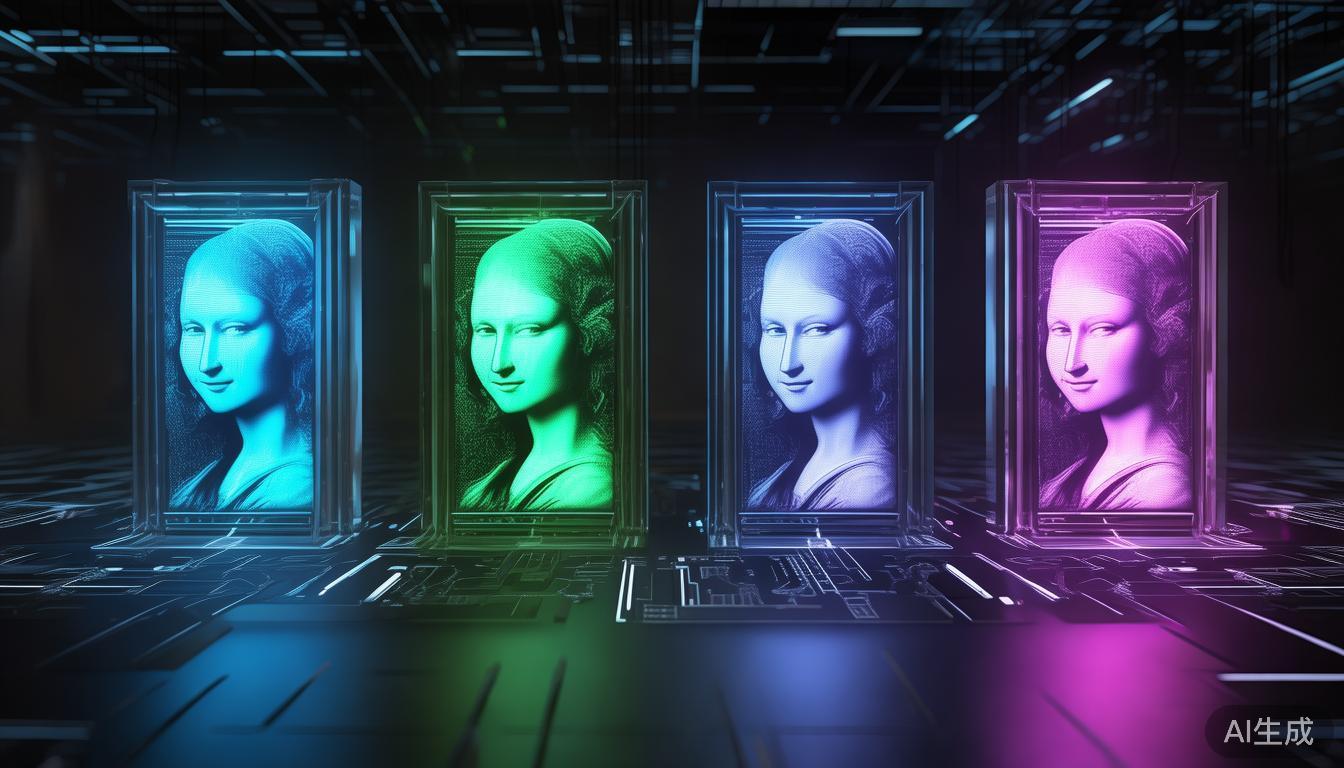
用AI绘制蒙娜丽莎:GPT-5.6、Claude、Gemini和Grok的对比研究
在人工智能不断发展的浪潮中,大型语言模型(LLMs)生成创意输出的能力已成为一个既引人入胜又充满争议的话题。这项技术在视觉艺术领域的应用最为引人入胜。AI能否真正“绘制”出蒙娜丽莎这样的杰作?TryAI最近的实验探讨了这个问题,将四个领先的大型语言模型——GPT-5.6、Claude、Gemini和Grok——置于一个独特的挑战中。实验结果为这些尖端模型的优缺点提供了宝贵的见解。
实验对比分析
实验的核心很简单:每个AI模型都被要求使用指定的媒介——彩色铅笔——来生成蒙娜丽莎的图像。目标是评估每个模型将文本指令转化为连贯且具有视觉吸引力的艺术表现的能力。实验结果在Hacker News上发布,引发了社区的热烈讨论。
方法论
该过程涉及向每个AI提供详细提示,该提示在文本和艺术术语两方面都描述了蒙娜丽莎。例如:
"使用彩色铅笔创作蒙娜丽莎的肖像。专注于捕捉她神秘的微笑和她服装的详细纹理。使用一系列色调来传达深度和情感。"
然后,每个模型根据这个提示生成图像。评估标准包括:
- 准确性:生成的图像与蒙娜丽莎的相似程度。
- 艺术质量:细节程度、色彩使用和整体美学吸引力。
- 创造力:模型是否添加了任何独特的解释或风格元素。
结果
结果出人意料地多样化,揭示了每个模型的优点和缺点。
GPT-5.6:多才多艺的表现者
GPT-5.6以其多才多艺和稳健性而闻名,其结果令人称赞。生成的蒙娜丽莎图像细节丰富且相对准确,捕捉了肖像的标志性特征。彩色铅笔的使用显而易见,平衡的调色板为图像增添了深度。
GPT-5.6输出中的一个突出特点是它能够保持蒙娜丽莎令人着迷的微笑,这是她成为神秘象征的持久原因。该模型还以一定的技巧处理了她服装的纹理,尽管在细节丰富的区域,细节本可以更丰富。
分析
GPT-5.6的表现突出了其理解和执行复杂提示的能力。然而,图像也突出了它的局限性。艺术细节水平很好,但不是特别出色。它似乎更多地依赖于其训练数据的模式,而不是真正的创意解释。
Claude:细致的观察者
Claude是另一个强有力的竞争者,它生成的图像既详细又忠实于提示。彩色铅笔的使用显而易见,重点是现实主义。蒙娜丽莎的面部特征被准确呈现,服装具有纹理质量,增加了整体现实主义。
Claude与众不同之处在于它对细节的关注。该模型似乎一丝不苟地遵循提示,导致图像在技术上很熟练。然而,这种一丝不苟有时以牺牲艺术魅力为代价。虽然准确,但图像缺乏情感深度和创意解释,这些可以将其提升到更高的艺术水平。
分析
Claude的表现展示了它遵循详细指令的能力。这在精度至上的情况下特别有用。然而,准确性和创造力之间的权衡是一个显著的局限性。Claude擅长复制,但不一定擅长创新。
Gemini:平衡的创造者
Gemini以其技术实力和创意能力的平衡而闻名,其结果介于GPT-5.6和Claude之间。蒙娜丽莎的图像渲染良好,细节和艺术表达之间取得了良好的平衡。彩色铅笔的使用显而易见,整体构图令人愉悦。
Gemini输出的一個強點是它能够為图像注入藝術魅力。雖然它保持了準確性,但也添加了表明一定程度創意解釋的元素。這使得图像在技術執行和藝術價值方面都顯得突出。
分析
Gemini的表现突出了其弥合技术准确性和创意表达之间差距的能力。这使得它在需要精度和创新的任务中成为多才多藝的選擇。然而,图像也顯示出Gemini在捕捉藝術表達的微妙之處方面可以從進一步的完善中受益。
Grok:創新的探索者
Grok以其創新方法而聞名,它生成的图像既獨特又引人入勝。蒙娜丽莎是用彩色鉛筆渲染的,但具有獨特的風格轉折。該模型似乎以更抽象的方式解釋提示,添加了與肖像傳統描繪不同的元素。
雖然Grok的图像在複製蒙娜丽莎方面不够準確,但它非常創意。色彩和纹理的使用具有創新性,整體構圖具有現代藝術感。這種方法雖然非傳統,但展示了Grok跳出框框思考的能力,並生成既獨特又引人入勝的輸出。
分析
Grok的表现突出了其在創意探索方面的強項。该模型不太關心複製現有模式,而更專注於生成新穎的輸出。這使其成為需要創新和創原性的任務的優秀選擇。然而,代價是準確性和傳統標準的顯著下降。
讨论:AI在藝術中的影響
這次實驗的結果突出了有關當前AI在視覺藝術領域的幾個關鍵見解:
-
多樣性與專業性:像GPT-5.6和Gemini這樣的模型在多樣性方面表现出色,能够處理廣泛的提示,並在準確性和創意之間取得平衡。另一方面,像Claude和Grok這樣的模型分別專注於詳細複製或創意探索。
-
訓練數據的作用:生成的图像质量很大程度上受模型訓練數據的影響。訓練數據更廣泛、更多樣的模型往往能產生更細膩、更準確的輸出。
-
AI在藝術中的未來:隨著這些模型的不斷發展,人類和AI生成藝術之間的界線越來越模糊。這引發了關於AI在創意過程中的作用以及使用AI創作藝術的倫理影響的問題。
總結
GPT-5.6、Claude、Gemini和Grok的實驗表明了當前LLMs在視覺藝術領域的多樣化能力和局限性。雖然這些模型可以生成令人印象深刻和創意的輸出,但它們在完全複製人類創作者的微妙藝術之處方面仍有很長的路要走。結果還突出了理解每個模型的優缺點以選擇適當工具的重要性。隨著AI的不斷發展,創意應用的可能性將會擴大,為藝術家和技術人員提供新的機會。
Drawing the Mona Lisa with AI: A Comparative Study of GPT-5.6, Claude, Gemini, and Grok
In the ever-evolving landscape of artificial intelligence, the ability of large language models (LLMs) to generate creative outputs has become a topic of both fascination and debate. One of the most intriguing applications of this technology is in the realm of visual art. Can an AI truly "draw" a masterpiece like the Mona Lisa? Recent experiments by TryAI have explored this question, pitting four leading LLMs—GPT-5.6, Claude, Gemini, and Grok—against each other in a unique challenge. The results offer valuable insights into the strengths and limitations of these cutting-edge models.
The Experiment: A Comparative Analysis
The core of the experiment was straightforward: each AI model was tasked with generating an image of the Mona Lisa using a specified medium—colored pencils. The goal was to evaluate how well each model could translate textual instructions into a coherent and visually appealing artistic representation. The results were shared on Hacker News, sparking a lively discussion among the community.
Methodology
The process involved providing each AI with a detailed prompt that described the Mona Lisa in both textual and artistic terms. For example:
"Create a portrait of the Mona Lisa using colored pencils. Focus on capturing her enigmatic smile and the detailed texture of her clothing. Use a range of shades to convey depth and emotion."
Each model then generated an image based on this prompt. The evaluation criteria included:
- Accuracy: How closely the generated image resembled the Mona Lisa.
- Artistic Quality: The level of detail, color usage, and overall aesthetic appeal.
- Creativity: Whether the model added any unique interpretations or stylistic elements.
The Results
The outcomes were surprisingly diverse, revealing both the capabilities and pitfalls of each model.
GPT-5.6: The Versatile Performer
GPT-5.6, known for its versatility and robustness, delivered a commendable result. The generated image of the Mona Lisa was detailed and relatively accurate, capturing the iconic features of the portrait. The use of colored pencils was evident, with a balanced palette that added depth to the image.
One of the standout features of GPT-5.6's output was its ability to maintain the enigmatic smile that has made the Mona Lisa an enduring symbol of mystery. The model also handled the texture of her clothing with a degree of finesse, though there were noticeable areas where the detail could have been richer.
Analysis
GPT-5.6's performance underscores its strength in understanding and executing complex prompts. However, the image also highlighted its limitations. The level of artistic nuance was good, but not exceptional. It seemed to rely more on its training data's patterns than on true creative interpretation.
Claude: The Detailed Observer
Claude, another strong contender, produced an image that was both detailed and faithful to the prompt. The use of colored pencils was evident, with a focus on realism. The Mona Lisa's facial features were accurately rendered, and the clothing had a textured quality that added to the overall realism.
What set Claude apart was its attention to detail. The model seemed to meticulously follow the prompt, resulting in an image that was technically proficient. However, this meticulousness sometimes came at the cost of artistic flair. The image, while accurate, lacked the emotional depth and creative interpretation that could elevate it to a higher artistic level.
Analysis
Claude's performance demonstrates its strength in adhering to detailed instructions. This is particularly useful in scenarios where precision is paramount. However, the trade-off between accuracy and creativity is a notable limitation. Claude excels in replicating, but not necessarily in innovating.
Gemini: The Balanced Creator
Gemini, known for its balance of technical prowess and creative capabilities, delivered a result that was a middle ground between GPT-5.6 and Claude. The image of the Mona Lisa was well-rendered, with a good balance of detail and artistic expression. The use of colored pencils was evident, and the overall composition was pleasing to the eye.
One of the strengths of Gemini's output was its ability to infuse the image with a sense of artistic flair. While it maintained accuracy, it also added elements that suggested a degree of creative interpretation. This made the image stand out in terms of both technical execution and artistic merit.
Analysis
Gemini's performance highlights its ability to bridge the gap between technical accuracy and creative expression. This makes it a versatile choice for tasks that require both precision and innovation. However, the image also revealed that Gemini could benefit from further refinement in capturing the subtleties of artistic expression.
Grok: The Innovative Explorer
Grok, known for its innovative approach, produced an image that was both unique and intriguing. The Mona Lisa was rendered in colored pencils, but with a distinct stylistic twist. The model seemed to interpret the prompt in a more abstract manner, adding elements that deviated from the traditional depiction of the portrait.
While Grok's image was less accurate in terms of replicating the Mona Lisa, it was highly creative. The use of color and texture was innovative, and the overall composition had a modern artistic feel. This approach, while unconventional, demonstrated Grok's ability to think outside the box and generate outputs that were both unique and engaging.
Analysis
Grok's performance underscores its strength in creative exploration. The model is less concerned with replicating existing patterns and more focused on generating novel outputs. This makes it an excellent choice for tasks that require innovation and originality. However, the trade-off is a noticeable drop in accuracy and adherence to traditional standards.
Discussion: The Implications of AI in Art
The results of this experiment highlight several key insights into the current state of AI in the realm of visual art:
-
Versatility vs. Specialization: Models like GPT-5.6 and Gemini excel in versatility, capable of handling a wide range of prompts with a balance of accuracy and creativity. On the other hand, models like Claude and Grok specialize in either detailed replication or creative exploration, respectively.
-
The Role of Training Data: The quality of the generated images is heavily influenced by the training data of the models. Models with more extensive and diverse training data tend to produce more nuanced and accurate outputs.
-
The Future of AI in Art: As these models continue to evolve, the line between human and AI-generated art is becoming increasingly blurred. This raises questions about the role of AI in the creative process and the ethical implications of using AI to create art.
Takeaway
The experiment with GPT-5.6, Claude, Gemini, and Grok demonstrates the diverse capabilities and limitations of current LLMs in the realm of visual art. While these models can generate impressive and creative outputs, they still have a ways to go before they can fully replicate the nuanced artistry of a human creator. The results also highlight the importance of understanding the strengths and weaknesses of each model to choose the right tool for the task at hand. As AI continues to evolve, the possibilities for creative applications are bound to expand, offering new opportunities for both artists and technologists.