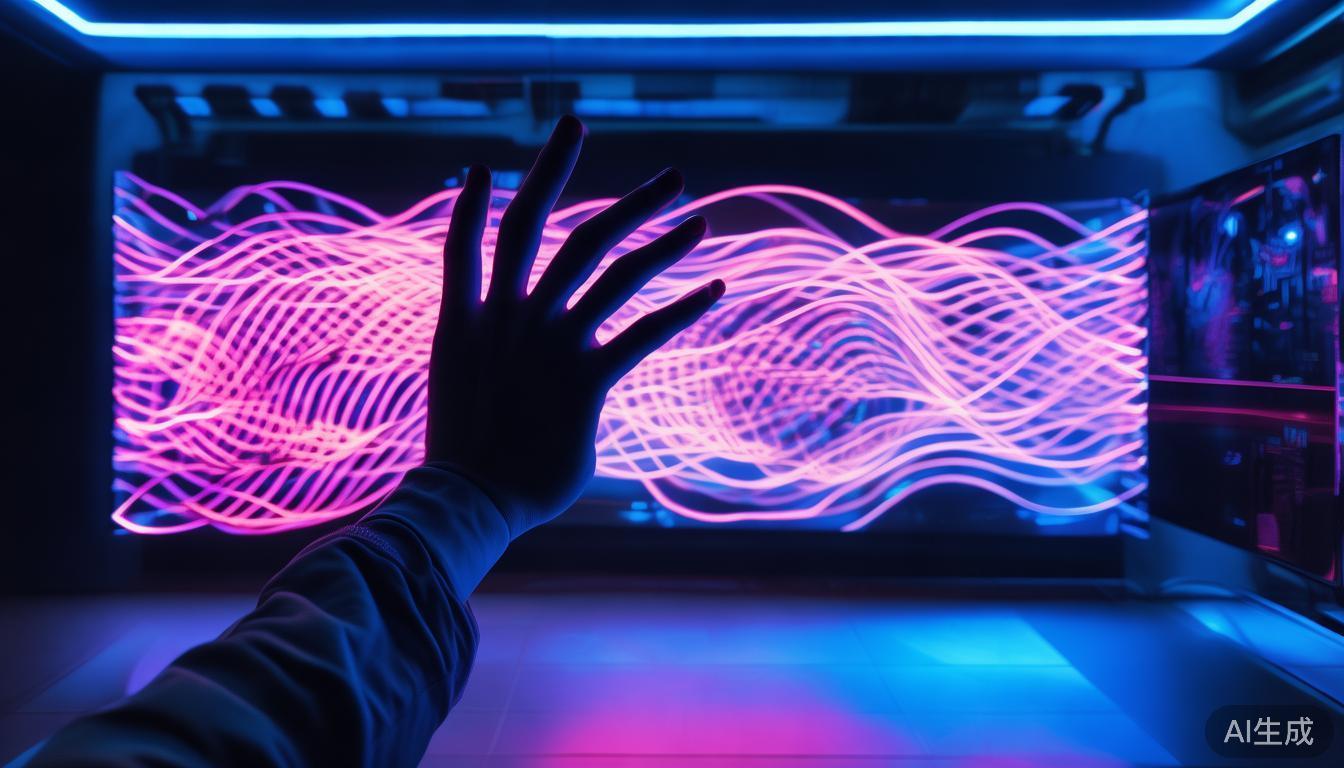
空气 Theremin —— 你只需挥手就能在浏览器中演奏的 Theremin
拥有悠久历史的 Theremin 乐器,凭借其诡异空灵的音色,长期以来一直吸引着音乐家和爱好者。这种独特的设备诞生于 20 世纪 20 年代,由 Leon Theremin 发明,它通过检测电磁场的变化来产生音乐。与传统乐器不同,Theremin 不需要物理接触——演奏者只需移动双手,就能操纵电磁场,从而创造出 hauntingly beautiful 的旋律。尽管 Theremin 在多年间经历了流行和复兴,但其复杂性和对专业设备的依赖限制了其普及性。现在,空气 Theremin 应运而生,这是一种基于浏览器的创新,它将这种经典乐器的魔力带给任何拥有网络摄像头和现代浏览器的用户。
Theremin 简史
在深入空气 Theremin 之前,花点时间欣赏这种乐器本身是值得的。Theremin 基于电容原理工作——电容器上存储的电荷量取决于其极板之间的距离。在 Theremin 中,两个天线充当电容器的极板,而演奏者的双手则创造了它们之间的不同距离,从而改变了电磁场,进而改变了声音的音高。
Theremin 如此独特之处在于它无需物理接触。演奏者只需将双手靠近天线,就能产生音乐,使其成为最早的“手势控制”乐器之一。这一特性使其成为科幻作品的常客,也是实验音乐家的最爱。然而,Theremin 对环境的敏感性以及精确手部动作的需求,使其难以掌握,通常需要专门的培训或设置。
介绍空气 Theremin
空气 Theremin 改变了这一切。由 Bizibah 开发的这种基于网络的 Theremin 允许用户无需任何物理硬件就能演奏该乐器。相反,它利用计算机视觉和机器学习来检测用户通过网络摄像头的手部动作。以下是它的工作原理:
- 网络摄像头集成:空气 Theremin 访问您的网络摄像头,并使用它来跟踪您双手的位置和运动。
- 手势识别:通过计算机视觉算法和机器学习模型的组合,应用程序解释这些动作并将它们映射到特定的音符。
- 声音合成:捕获的手势被转换为音频信号,产生 Theremin 的典型音色。
它的与众不同之处
将空气 Theremin 与其他在线音乐工具区分开来的是其对基于手势的控制。与依赖键盘或鼠标输入的虚拟乐器不同,这个工具允许更自然和直观的交互。演奏者可以通过尝试不同的手势来创作独特的旋律,使其成为初学者和经验丰富的音乐家都强大的工具。
开始使用空气 Theremin
使用空气 Theremin 非常简单。以下是逐步指南,帮助您开始演奏:
- 访问网络应用程序:导航到空气 Theremin 网站位于 https://theremin.bizibah.com/。
- 允许网络摄像头访问:第一次加载页面时,系统会提示您允许网站访问您的网络摄像头。确保您授予必要的权限。
- 调整网络摄像头位置:确保您的网络摄像头能清晰地看到您的双手。将网络摄像头放置在您可以舒适演奏且不会离摄像头太远的高度。
- 挥手演奏:一切设置就绪后,您就可以开始演奏了。将双手移到摄像头前来控制音高。屏幕的左侧通常对应低音,而右侧产生高音。
示例:基本旋律
让我们通过一个简单的示例来说明您可能如何演奏一个基本旋律:
- 开始一个低音:将手挥向屏幕左侧以产生低音调音符。
- 过渡到高音:将手移到右侧以切换到更高音调。
- 创造节奏:结合不同的手势来创造节奏模式。
以下是交互可能看起来像代码的简单示例(请注意,这是一个概念性示例,并非实际的 JavaScript):
// 示例:手势位置到音符的映射
function mapHandPosition_toNote(handPosition) {
  if (handPosition < 0.3) {
    return 'C3'; // 低音
  } else if (handPosition > 0.7) {
    return 'C4'; // 高音
  } else {
    return 'C3'; // 中音
  }
}

// 示例用法
const handPosition = 0.5; // 中间位置
const note = mapHandPosition_toNote(handPosition);
console.log(`演奏音符:${note}`);
这个示例展示了如何将手势位置映射到音乐音符。在实际应用中,映射会更加精细,需要考虑动作的速度和方向,以创造更丰富的音乐体验。
魔法背后的技术
空气 Theremin 是计算机视觉和机器学习进步的证明。以下是更深入地了解驱动这项创新工具的技术:
计算机视觉
计算机视觉是人工智能领域,使机器能够基于视觉数据解释和做决策。在空气 Theremin 中,计算机视觉算法分析来自网络摄像头的视频帧,以检测和跟踪演奏者的双手。这涉及以下步骤:
- 帧提取:网络摄像头捕获视频帧,然后由应用程序处理。
- 手部检测:使用背景减法和肤色分割等技术,算法在帧中识别演奏者的双手。
- 手部跟踪:一旦检测到,算法跨帧跟踪双手的位置和运动。
机器学习
机器学习在将手势转换为音乐音符中起着至关重要的作用。该过程涉及训练模型以识别数据中的模式:
- 数据收集:收集与不同音符相对应的手势数据集。
- 模型训练:在数据集上训练机器学习模型(如神经网络),以学习手势运动与音乐音符之间的关系。
- 实时预测:在演奏过程中,模型处理当前手势并实时预测相应的音符。
挑战与解决方案
开发空气 Theremin 并非没有挑战。主要障碍之一是在各种光照条件和不同演奏者中确保精确的手部跟踪。为了应对这一挑战,开发者采用了多种技术:
- 自适应阈值:根据光照环境调整手部检测算法的灵敏度。
- 多类分类:训练模型以识别多种手部状态(例如,张开、闭合、挥手),以提高准确性。
- 用户校准:允许演奏者校准应用程序以适应他们的特定手势和演奏风格。
Theremin 在现代音乐中的应用
Theremin 在现代音乐中的复兴证明了其独特的音色和多功能性。虽然传统上与古典和实验音乐相关联,但 Theremin 已经进入当代音乐、电影配乐甚至电子游戏中。像 Crystal Castles 和 The Melting Point 这样的艺术家已经拥抱了 Theremin,利用其诡异音调创造出 haunting 和 atmospheric 的音景。
空气 Theremin 将这种经典乐器带给更广泛的受众,允许音乐家和爱好者在不需专业设备的情况下探索其音色。这种 Theremin 的民主化可能带来新的创意应用,并进一步推动手势控制音乐的创新发展。
社区反响
空气 Theremin 在技术和音乐社区中引起了广泛关注。在 Hacker News 上,该工具因其创新性和易用性获得了积极的反馈。评论者赞扬其用户友好的界面和创意表达的潜力。然而,一些用户指出,手部跟踪的准确性可以进一步提高,特别是在拥挤或杂乱的背景下。
尽管存在这些轻微的批评,整体情绪是兴奋和期待未来的发展。空气 Theremin 激发了关于手势控制乐器未来的讨论,以及网络技术在民主化音乐创作中的作用。
总结
空气 Theremin 不仅仅是一个有趣的网络实验;它有力地展示了现代技术如何以新的、易于访问的方式让经典乐器焕发生机。通过利用计算机视觉和机器学习,它允许任何拥有网络摄像头的用户通过挥手艺术创作音乐。这项创新不仅降低了音乐家的进入门槛,还开辟了新的创意和表达途径。随着技术的不断发展,我们可以期待看到更多像空气 Theremin 这样的工具,将艺术与技术相结合,使音乐创作比以往任何时候都更具包容性和参与性。
Air Theremin – A Browser Theremin You Play by Waving at Your Webcam
The theremin, an instrument with a storied history, has long captivated musicians and enthusiasts with its eerie, ethereal sound. Originally developed in the 1920s by Leon Theremin, this unique device produces music by detecting changes in an electromagnetic field. Unlike traditional instruments, the theremin doesn't require physical contact—players manipulate the field by simply moving their hands, creating a hauntingly beautiful melody. While the theremin has seen its share of popularity and revival over the years, its complexity and the need for specialized equipment have limited its accessibility. Enter the Air Theremin, a browser-based innovation that brings the magic of this classic instrument to anyone with a webcam and a modern browser.
The Theremin: A Brief History
Before diving into the Air Theremin, it's worth taking a moment to appreciate the instrument itself. The theremin operates on the principle of capacitance—the amount of electric charge stored on a capacitor depends on the distance between its plates. In the theremin, two antennas act as the capacitor plates, and the player's hands create varying distances between them, altering the electromagnetic field and thus the pitch of the sound.
What makes the theremin so unique is its lack of physical contact. Players can produce music by simply waving their hands near the antennas, making it one of the earliest examples of a "gesture-controlled" instrument. This characteristic has made it a staple in science fiction and a favorite among experimental musicians. However, the theremin's sensitivity to its environment and the need for precise hand movements have made it challenging to master, often requiring specialized training or setups.
Introducing the Air Theremin
The Air Theremin changes all that. Developed by Bizibah, this web-based theremin allows users to play the instrument without any physical hardware. Instead, it leverages computer vision and machine learning to detect the player's hand movements using their webcam. Here’s how it works:
- Webcam Integration: The Air Theremin accesses your webcam and uses it to track the position and movement of your hand.
- Gesture Recognition: Through a combination of computer vision algorithms and machine learning models, the application interprets these movements and maps them to specific notes.
- Sound Synthesis: The captured gestures are translated into audio signals, producing the characteristic theremin sound.
How It Stands Out
What sets the Air Theremin apart from other online musical tools is its focus on gesture-based control. Unlike virtual instruments that rely on keyboard or mouse inputs, this tool allows for a more natural and intuitive interaction. Players can experiment with different hand movements to create unique melodies, making it a powerful tool for both beginners and experienced musicians.
Getting Started with the Air Theremin
Using the Air Theremin is remarkably straightforward. Here’s a step-by-step guide to get you playing:
- Access the Web Application: Navigate to the Air Theremin website at https://theremin.bizibah.com/.
- Allow Webcam Access: The first time you load the page, you’ll be prompted to allow the website to access your webcam. Ensure you grant the necessary permissions.
- Position Your Webcam: Make sure your webcam has a clear view of your hands. Position it at a height where you can comfortably play without moving too far from the camera.
- Play by Waving: Once everything is set up, you can start playing. Move your hands in front of the camera to control the pitch. The left side of the screen typically corresponds to lower notes, while the right side produces higher notes.
Example: Basic Melody
Let’s walk through a simple example to illustrate how you might play a basic melody:
- Start with a Low Note: Wave your hand towards the left side of the screen to produce a low-pitched note.
- Transition to a Higher Note: Move your hand to the right side to shift to a higher pitch.
- Create a Rhythm: Combine different hand movements to create a rhythmic pattern.
Here’s a simple snippet of what the interaction might look like in code (note that this is a conceptual example and not actual JavaScript):
// Example: Simple hand movement to note mapping
function mapHandPosition_toNote(handPosition) {
  if (handPosition < 0.3) {
    return 'C3'; // Low note
  } else if (handPosition > 0.7) {
    return 'C4'; // High note
  } else {
    return 'C3'; // Middle note
  }
}

// Example usage
const handPosition = 0.5; // Mid-position
const note = mapHandPosition_toNote(handPosition);
console.log(`Playing note: ${note}`);
This example demonstrates how hand positions can be mapped to musical notes. In a real-world application, the mapping would be more nuanced, taking into account the speed and direction of the movements to create a richer musical experience.
The Technology Behind the Magic
The Air Theremin is a testament to the advancements in computer vision and machine learning. Here’s a deeper look into the technologies that power this innovative tool:
Computer Vision
Computer vision is the field of AI that enables machines to interpret and make decisions based on visual data. In the Air Theremin, computer vision algorithms analyze video frames from the webcam to detect and track the player's hand. This involves several steps:
- Frame Extraction: The webcam captures video frames, which are then processed by the application.
- Hand Detection: Using techniques like background subtraction and skin color segmentation, the algorithm identifies the player's hand within the frame.
- Hand Tracking: Once detected, the algorithm tracks the hand's position and movement across frames.
Machine Learning
Machine learning plays a crucial role in translating hand movements into musical notes. The process involves training a model to recognize patterns in the data:
- Data Collection: A dataset of hand movements corresponding to different notes is collected.
- Model Training: A machine learning model, such as a neural network, is trained on this dataset to learn the relationship between hand movements and musical notes.
- Real-Time Prediction: During play, the model processes the current hand movement and predicts the corresponding note in real-time.
Challenges and Solutions
Developing the Air Theremin wasn't without its challenges. One of the primary hurdles was ensuring accurate hand tracking in various lighting conditions and with different players. To address this, the developers employed several techniques:
- Adaptive Thresholding: Adjusting the sensitivity of the hand detection algorithm based on the lighting environment.
- Multi-Class Classification: Training the model to recognize multiple hand states (e.g., open, closed, waving) to improve accuracy.
- User Calibration: Allowing players to calibrate the application to their specific hand movements and playing style.
The Theremin in Modern Music
The resurgence of the theremin in modern music is a testament to its unique sound and versatility. While traditionally associated with classical and experimental genres, the theremin has found its way into contemporary music, film scores, and even video games. Artists like Crystal Castles and The Melting Point have embraced the theremin, using its eerie tones to create haunting and atmospheric soundscapes.
The Air Theremin brings this classic instrument to a broader audience, allowing musicians and hobbyists to experiment with its sound without the need for specialized equipment. This democratization of the theremin could lead to new creative applications and further innovation in gesture-controlled music.
Community Response
The Air Theremin has garnered significant interest in the tech and music communities. On Hacker News, the tool received positive feedback for its innovation and accessibility. Commenters praised its user-friendly interface and the potential for creative expression. However, some users noted that the accuracy of hand tracking could be improved, particularly in crowded or cluttered backgrounds.
Despite these minor criticisms, the overall sentiment is one of excitement and anticipation for future developments. The Air Theremin has sparked discussions about the future of gesture-controlled instruments and the role of web technologies in democratizing music creation.
Takeaway
The Air Theremin is more than just a fun web experiment; it’s a powerful demonstration of how modern technology can bring classic instruments to life in new and accessible ways. By leveraging computer vision and machine learning, it allows anyone with a webcam to create music through the art of hand waving. This innovation not only lowers the barrier to entry for musicians but also opens up new avenues for creativity and expression. As technology continues to evolve, we can expect to see more tools like the Air Theremin that blend art and technology, making music creation more inclusive and engaging than ever before.