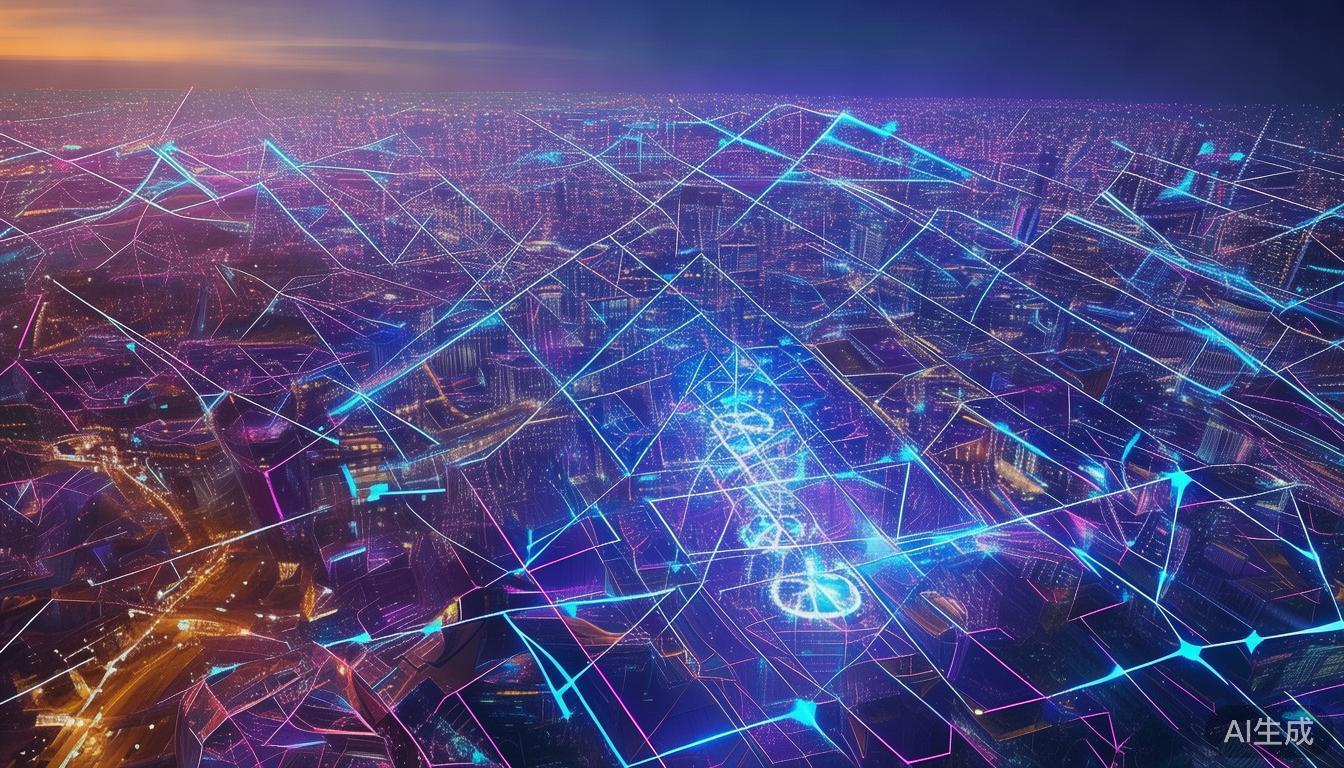
理解多智能体系统的复杂性:洞见与挑战
新兴的多智能体系统(MAS)代表了人工智能的前沿领域,其中众多自治实体在共享环境中交互、协调并做出决策。这些系统有望革新从机器人、自动驾驶汽车到复杂供应链和社交网络等各个领域。然而,与任何快速发展的领域一样,理解多智能体系统内在的模式和问题需要细致的分析和对其底层机制进行深入的理解。
多智能体系统的架构
从本质上讲,多智能体系统由多个交互的智能体组成。每个智能体独立运行,通常具有自身的目标,并必须适应其他智能体的行为。这种去中心化结构既带来了机遇也带来了挑战。一方面,它允许系统具有可扩展性和鲁棒性,即使单个智能体出现故障,系统仍能继续运行。另一方面,它使协调和通信变得复杂,因此设计确保顺畅交互的机制至关重要。
以一个简单示例来说明:一个交通管理系统,其中自动驾驶汽车必须通过交叉路口。每辆汽车(智能体)根据其即时环境和附近汽车的行为做出决策。一个设计良好的系统会确保这些决策共同优化交通流量,减少拥堵并降低碰撞风险。然而,要实现这一点需要复杂的算法来处理现实世界交互的动态性和不可预测性。
多智能体系统中的模式
在多智能体系统的设计和实现中,会出现一些反复出现的模式。理解这些模式有助于开发者预见并缓解潜在问题。
1. 协调机制
多智能体系统中的主要挑战之一是确保智能体有效协调。常见的方法包括:
-
集中式协调:中央控制器指导所有智能体的行为。这简化了协调,但可能成为瓶颈和单点故障。
-
去中心化协调:智能体直接交互,使用共识算法或基于市场的机制等协议。这增强了可扩展性,但需要仔细设计以避免协调失败。
-
混合方法:结合集中式和去中心化元素,例如使用中央控制器进行高层规划,使用去中心化协调进行低层执行。
例如,在一个多机器人仓库中,集中式系统可能向机器人分配任务,而每个机器人使用本地传感器和通信来导航障碍物并避免与其他机器人碰撞。
2. 通信协议
有效的通信对于智能体共享信息并做出明智决策至关重要。关键的通信模式包括:
-
直接通信:智能体直接与其邻居交换消息。这很简单,但在大型系统中可能导致可扩展性问题。
-
间接通信:智能体通过中介(如中央代理)传递消息。这提高了可扩展性,但引入了延迟和潜在的瓶颈。
-
自适应通信:智能体根据网络拓扑和流量负载动态调整其通信策略。这提高了效率,但需要复杂的算法。
以社交网络平台为例,其中用户(智能体)分享内容。直接通信可能涉及用户向其关注者发送消息,而间接通信可能涉及中央服务器向更广泛的群体转发消息。
3. 学习与适应
多智能体系统通常受益于能够从其交互中学习的能力。这可以通过以下方式实现:
-
强化学习:智能体通过接收奖励或惩罚来学习其行为。这对于在动态环境中优化行为很有用。
-
模仿学习:智能体通过观察其他智能体的行为来学习。这在专家行为可用的场景中很有效。
-
集体学习:智能体共享其经验并集体学习,从而提高整个系统的性能。
例如,在一个多智能体导航系统中,智能体可以使用强化学习根据环境和其他智能体的实时反馈优化其路径。
问题与挑战
尽管具有巨大潜力,但多智能体系统面临几个重大挑战,需要解决:
1. 可扩展性
随着智能体数量的增加,系统的复杂性呈指数级增长。设计可扩展的通信和协调机制对于确保系统保持高效和响应能力至关重要。
例如,在一个大规模自动驾驶车队中,直接通信方法可能因消息量巨大而变得不切实际。混合方法,结合集中式和去中心化通信,可能更有效。
2. 涌现行为
在复杂的多智能体系统中,智能体的集体行为可能表现出难以预测的涌现特性。虽然涌现行为可能是有益的,但如果管理不当,也可能导致意外后果。
以一群机器人完成任务为例。虽然单个机器人遵循简单规则,但它们的集体行为可能导致意外模式,如拥堵或不均匀的工作量分配。需要仔细设计和测试,以确保涌现行为与系统的目标一致。
3. 安全性与可靠性
多智能体系统容易受到各种安全威胁,如恶意智能体可能破坏系统或窃取敏感信息。确保这些系统的安全性和可靠性需要强大的身份验证、授权和加密机制。
例如,在一个金融交易系统中,恶意智能体可以通过发送虚假信号来操纵市场。实施强大的安全措施对于防止此类攻击至关重要。
案例研究:多智能体交通管理
为了说明多智能体系统的复杂性,让我们考虑一个多智能体交通管理系统的案例研究。目标是根据实时交通状况动态调整交通信号灯,以优化城市交通流量。
系统设计
-
智能体:每个交通信号灯都是一个智能体,能够感知交通流量并与相邻的灯通信。
-
协调机制:使用去中心化方法,其中每个交通信号灯根据本地交通状况和来自相邻信号灯的消息调整其信号。
-
通信协议:智能体使用直接和间接通信的组合来共享交通流量信息。
-
学习与适应:智能体使用强化学习根据实时反馈优化其信号时机。
挑战
解决方案
-
可扩展性:使用分层通信架构,其中附近的交通信号灯直接通信,而较远的信号灯依赖中介。
-
涌现行为:设计算法确保交通信号灯以最小化停车和延误的方式协调。
-
安全性:交通信号灯使用加密签名来验证消息的真实性,防止恶意智能体操纵。
总结
多智能体系统为以去中心化和可扩展的方式解决复杂问题提供了巨大潜力。然而,成功实施这些系统需要仔细考虑协调机制、通信协议和学习策略。通过理解这些系统内在的模式和挑战,开发者可以设计出更健壮、高效和安全的解决方案。随着该领域的不断发展,解决这些问题对于充分发挥多智能体系统在各个领域的潜力至关重要。
Navigating the Complexities of Multi-Agent Systems: Insights and Challenges
Emerging multi-agent systems (MAS) represent a frontier in artificial intelligence, where numerous autonomous entities interact, coordinate, and make decisions within a shared environment. These systems are poised to revolutionize everything from robotics and autonomous vehicles to complex supply chains and social networks. However, as with any rapidly evolving field, navigating the patterns and problems inherent in MAS requires careful analysis and a nuanced understanding of their underlying mechanics.
The Architecture of Multi-Agent Systems
At their core, multi-agent systems are composed of multiple interacting agents. Each agent operates independently, often with its own objectives, and must adapt to the actions of others. This decentralized structure introduces both opportunities and challenges. On one hand, it allows for scalability and robustness, as the system can continue to function even if individual agents fail. On the other hand, it complicates coordination and communication, making it essential to design mechanisms that ensure smooth interaction.
Consider a simple example: a traffic management system where autonomous vehicles must navigate intersections. Each vehicle (agent) makes decisions based on its immediate environment and the actions of nearby vehicles. A well-designed system would ensure that these decisions collectively optimize traffic flow, minimizing congestion and reducing the risk of collisions. However, achieving this requires sophisticated algorithms that can handle the dynamic and unpredictable nature of real-world interactions.
Patterns in Multi-Agent Systems
Several recurring patterns emerge in the design and implementation of multi-agent systems. Understanding these patterns can help developers anticipate and mitigate potential issues.
1. Coordination Mechanisms
One of the primary challenges in MAS is ensuring that agents coordinate effectively. Common approaches include:
-
Centralized Coordination: A central controller directs the actions of all agents. This simplifies coordination but can become a bottleneck and a single point of failure.
-
Decentralized Coordination: Agents interact directly, using protocols like consensus algorithms or market-based mechanisms. This enhances scalability but requires careful design to avoid coordination failures.
-
Hybrid Approaches: Combining centralized and decentralized elements, such as using a central controller for high-level planning and decentralized coordination for low-level execution.
For example, in a multi-robot warehouse, a centralized system might assign tasks to robots, while each robot uses local sensors and communication to navigate obstacles and avoid collisions with other robots.
2. Communication Protocols
Effective communication is crucial for agents to share information and make informed decisions. Key communication patterns include:
-
Direct Communication: Agents exchange messages directly with their neighbors. This is simple but can lead to scalability issues in large systems.
-
Indirect Communication: Agents relay messages through intermediaries, such as a central broker. This improves scalability but introduces latency and potential bottlenecks.
-
Adaptive Communication: Agents dynamically adjust their communication strategies based on the network topology and traffic load. This enhances efficiency but requires complex algorithms.
Consider a social networking platform where users (agents) share content. Direct communication might involve users sending messages to their followers, while indirect communication could involve a central server relaying messages to broader groups.
3. Learning and Adaptation
Multi-agent systems often benefit from the ability to learn from their interactions. This can be achieved through:
-
Reinforcement Learning: Agents learn by receiving rewards or penalties based on their actions. This is useful for optimizing behavior in dynamic environments.
-
Imitation Learning: Agents learn by observing the behavior of other agents. This is effective in scenarios where expert behavior is available.
-
Collective Learning: Agents share their experiences and learn collectively, improving the performance of the entire system.
For instance, in a multi-agent navigation system, agents can use reinforcement learning to optimize their paths based on real-time feedback from the environment and other agents.
Problems and Challenges
Despite their potential, multi-agent systems face several significant challenges that need to be addressed:
1. Scalability
As the number of agents increases, the complexity of the system grows exponentially. Designing scalable communication and coordination mechanisms is essential to ensure that the system remains efficient and responsive.
For example, in a large-scale autonomous vehicle fleet, a direct communication approach might become impractical due to the sheer volume of messages. A hybrid approach, combining centralized and decentralized communication, might be more effective.
2. Emergent Behavior
In complex MAS, the collective behavior of agents can exhibit emergent properties that are difficult to predict. While emergent behavior can be beneficial, it can also lead to unintended consequences if not properly managed.
Consider a swarm of robots tasked with completing a task. While the individual robots follow simple rules, their collective behavior might lead to unexpected patterns, such as congestion or uneven workload distribution. Careful design and testing are necessary to ensure that emergent behavior aligns with the system's objectives.
3. Security and Reliability
Multi-agent systems are vulnerable to various security threats, such as malicious agents that can disrupt the system or steal sensitive information. Ensuring the security and reliability of these systems requires robust authentication, authorization, and encryption mechanisms.
For instance, in a financial trading system, a malicious agent could manipulate the market by sending false signals. Implementing strong security measures is crucial to prevent such attacks.
Case Study: Multi-Agent Traffic Management
To illustrate the complexities of multi-agent systems, let's consider a case study of a multi-agent traffic management system. The goal is to optimize traffic flow in a city by dynamically adjusting traffic light signals based on real-time traffic conditions.
System Design
-
Agents: Each traffic light is an agent, capable of sensing traffic flow and communicating with neighboring lights.
-
Coordination Mechanism: A decentralized approach is used, where each traffic light adjusts its signal based on local traffic conditions and messages from neighboring lights.
-
Communication Protocol: Agents use a combination of direct and indirect communication to share information about traffic flow.
-
Learning and Adaptation: Agents use reinforcement learning to optimize their signal timing based on real-time feedback.
Challenges
-
Scalability: The system must handle a large number of traffic lights, each generating and processing data in real-time.
-
Emergent Behavior: The collective behavior of traffic lights must ensure smooth traffic flow while avoiding congestion.
-
Security: The system must be protected against malicious agents that could disrupt traffic signals.
Solutions
-
Scalability: A hierarchical communication architecture is used, where nearby traffic lights communicate directly, while distant lights rely on intermediaries.
-
Emergent Behavior: Algorithms are designed to ensure that traffic lights coordinate in a way that minimizes stops and delays.
-
Security: Traffic lights use cryptographic signatures to verify the authenticity of messages, preventing manipulation by malicious agents.
Takeaway
Multi-agent systems offer tremendous potential for solving complex problems in a decentralized and scalable manner. However, their successful implementation requires careful consideration of coordination mechanisms, communication protocols, and learning strategies. By understanding the patterns and challenges inherent in these systems, developers can design more robust, efficient, and secure solutions. As the field continues to evolve, addressing these issues will be crucial to realizing the full potential of multi-agent systems in various domains.