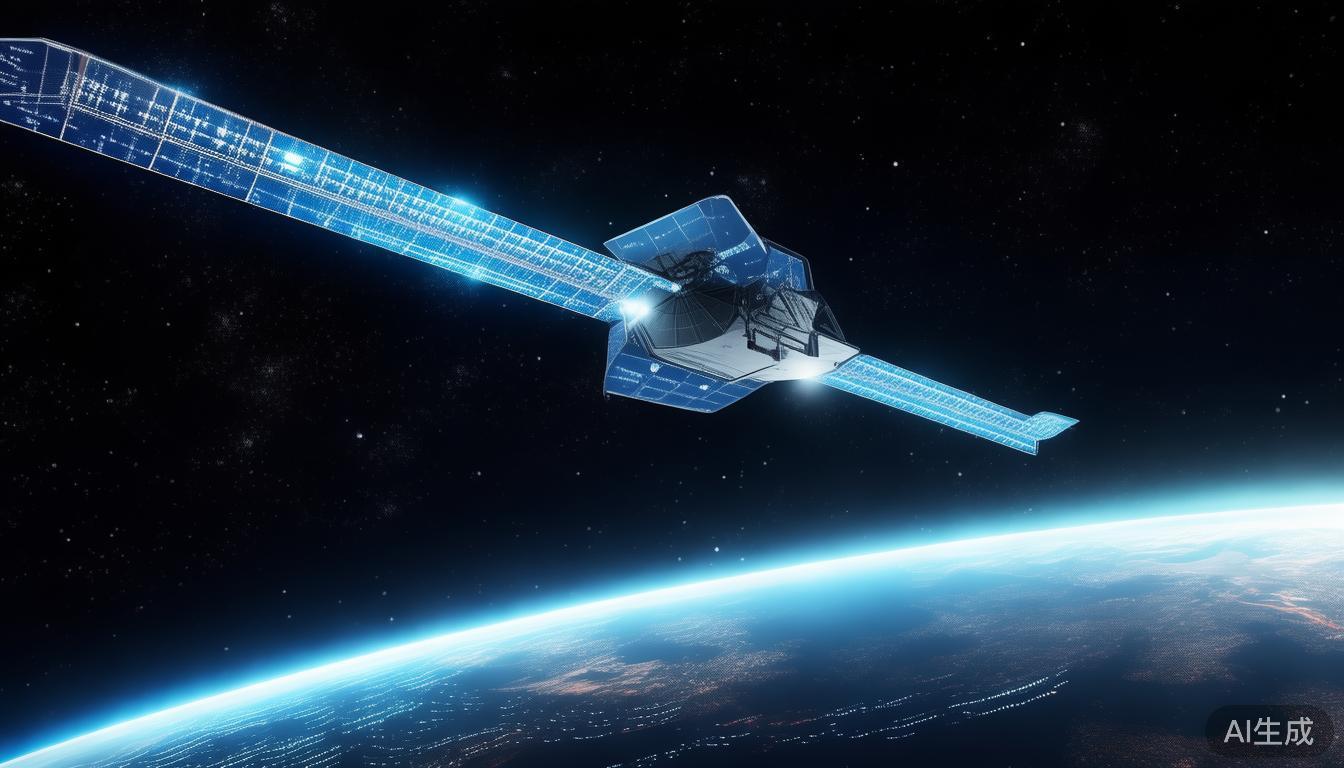
星链卫星:天空中的互联网之外
在过去十年中,星链卫星彻底改变了卫星互联网,为偏远和欠发达地区带来了高速连接。但这些卫星穿越地球大气层的旅程,却是一个关于物理学、工程学和气象学的迷人故事。近期在 Hacker News 和 SpaceWeather.com 等平台上的讨论,突显了星链卫星的一个意想不到用途:作为地球气压计,测量地球高层大气的密度。
星链卫星大气测量的科学原理
星链卫星是埃隆·马斯克雄心勃勃的全球互联网覆盖项目的一部分,设计用于在近地轨道(LEO)运行,通常高度在 550 至 1500 公里之间。它们在大气中的运行路径并非直线;相反,它们不断受到大气阻力的影响——这种力会减缓它们的速度,并需要定期加速以维持轨道。
这种阻力并非均匀一致。它取决于大气的密度,而大气密度又受太阳活动、温度和高度等因素的影响。通过精确追踪星链卫星的轨道,科学家可以收集这些变化的数据,从而深入了解高层大气的行为。
星链卫星如何充当气压计
大气阻力是多个变量的函数,包括卫星的横截面积、其速度和大气密度。阻力力的公式为:
F_d = 0.5 * ρ * v^2 * C_d * A
其中:
- F_d 是阻力力
- ρ 是大气密度
- v 是卫星的速度
- C_d 是阻力系数
- A 是横截面积
通过测量作用在星链卫星上的阻力力,科学家可以推算出大气密度(ρ)。这特别有用,因为传统的测量大气密度的方法,如气象气球或地面传感器,在范围和分辨率上有限制。
实际应用
从星链卫星收集的数据具有多种实际应用:
-
空间天气预报:了解大气密度对于预测地磁风暴等空间天气事件至关重要。这些风暴会干扰卫星通信、GPS 信号和电网。通过实时监测大气密度,科学家可以提供更准确的预报。
-
卫星运行:对于运营卫星的公司来说,精确了解大气条件对于规划维护窗口和燃料需求至关重要。星链的数据有助于优化卫星的寿命和效率。
-
气候研究:对大气密度的长期观测可以为气候研究做出贡献,帮助科学家了解地球大气随时间的变化。
案例:2022 年的太阳耀斑事件
星链卫星作为地球气压计的一个显著案例是 2022 年发生的一次太阳耀斑事件。太阳耀斑可以将大量等离子体注入地球大气层,增加其密度并改变其成分。通过比较星链卫星的预期轨道与耀斑期间的实际轨迹,科学家能够检测和量化这些变化。
这种检测大气密度微小变化的能力为研究开辟了新的途径。例如,科学家现在可以前所未有地详细研究不同类型的太阳活动如何影响高层大气。
挑战和局限性
尽管具有优势,但使用星链卫星作为气压计并非没有挑战:
-
卫星设计差异:不同的星链卫星可能设计略有不同,这会影响它们经历的阻力。这种变异性需要在分析中加以考虑。
-
数据处理:处理星链卫星收集的大量数据需要复杂的算法和计算资源。确保测量的准确性是一项复杂的任务。
-
环境因素:其他因素,如重力异常和大气湍流,也会影响卫星轨道。区分这些与阻力相关的效应需要仔细建模。
大气测量的未来
使用星链卫星作为地球气压计只是大气科学新纪元的开始。随着更多卫星的发射及其数据变得更加易于获取,科学家将能够改进他们的模型并做出更准确的测量。
此外,这种方法的成功可能会启发其他卫星星座被用于科学研究。例如,通信卫星有可能被用来研究电离层条件,为研究人员提供另一层数据。
总结
星链卫星已被证明不仅仅是提供互联网连接的手段;它们也是测量和理解地球高层大气的宝贵工具。通过利用从这些卫星收集的数据,科学家可以改进空间天气预报、优化卫星运行,并获得对气候变化的新的见解。随着我们继续部署和利用卫星星座,科学发现的机遇将不断扩大,使太空成为我们科学工具箱中更不可或缺的一部分。
Starlink Satellites: More Than Just Internet in the Sky
Over the past decade, Starlink has revolutionized satellite internet, bringing high-speed connectivity to remote and underserved areas. But the journey of these satellites through Earth's atmosphere is a fascinating tale of physics, engineering, and meteorology. Recent discussions on platforms like Hacker News and SpaceWeather.com have highlighted an unexpected use of Starlink satellites: as a planetary barometer, measuring the density of Earth's upper atmosphere.
The Science Behind Starlink's Atmospheric Measurements
Starlink satellites, part of Elon Musk's ambitious project to provide global internet coverage, are designed to operate in low Earth orbit (LEO), typically at altitudes between 550 and 1500 kilometers. Their paths through the atmosphere are not straight lines; instead, they are constantly influenced by atmospheric drag—a force that slows them down and requires periodic boosts to maintain their orbit.
This drag is not uniform. It varies depending on the density of the atmosphere, which in turn is affected by factors like solar activity, temperature, and altitude. By meticulously tracking the orbits of Starlink satellites, scientists can gather data on these variations, providing insights into the upper atmosphere's behavior.
How Starlink Satellites Act as Barometers
Atmospheric drag is a function of several variables, including the satellite's cross-sectional area, its velocity, and the atmospheric density. The formula for drag force is:
F_d = 0.5 * ρ * v^2 * C_d * A
Where:
- F_d is the drag force
- ρ is the atmospheric density
- v is the velocity of the satellite
- C_d is the drag coefficient
- A is the cross-sectional area
By measuring the drag force acting on Starlink satellites, scientists can infer the atmospheric density (ρ). This is particularly useful because traditional methods of measuring atmospheric density, such as weather balloons or ground-based sensors, are limited in their scope and resolution.
Real-World Applications
The data collected from Starlink satellites has several practical applications:
-
Space Weather Forecasting: Understanding atmospheric density is crucial for predicting space weather events like geomagnetic storms. These storms can disrupt satellite communications, GPS signals, and power grids. By monitoring atmospheric density in real-time, scientists can provide more accurate forecasts.
-
Satellite Operations: For companies operating satellites, knowing the precise atmospheric conditions is vital for planning maintenance windows and fueling requirements. Starlink's data helps optimize the lifespan and efficiency of satellites.
-
Climate Research: Long-term observations of atmospheric density can contribute to climate research, helping scientists understand how Earth's atmosphere is changing over time.
Example: The Case of Solar Flares
One notable example of Starlink's role as a planetary barometer was during a solar flare event in 2022. Solar flares can inject large amounts of plasma into Earth's atmosphere, increasing its density and altering its composition. By comparing the expected orbits of Starlink satellites with their actual trajectories during the flare, scientists were able to detect and quantify these changes.
This ability to detect minute variations in atmospheric density has opened up new avenues for research. For instance, scientists can now study how different types of solar activity affect the upper atmosphere with unprecedented detail.
Challenges and Limitations
Despite its advantages, using Starlink satellites as barometers is not without challenges:
-
Satellite Design Variations: Different Starlink satellites may have slightly different designs, which can affect how they experience drag. This variability needs to be accounted for in the analysis.
-
Data Processing: Processing the vast amounts of data collected by Starlink satellites requires sophisticated algorithms and computational resources. Ensuring the accuracy of the measurements is a complex task.
-
Environmental Factors: Other factors, such as gravitational anomalies and atmospheric turbulence, can also influence satellite orbits. Distinguishing these from drag-related effects requires careful modeling.
The Future of Atmospheric Measurement
The use of Starlink satellites as planetary barometers is just the beginning of a new era in atmospheric science. As more satellites are launched and their data becomes more accessible, scientists will be able to refine their models and make more accurate measurements.
Moreover, the success of this approach could inspire other satellite constellations to be repurposed for scientific research. For example, communication satellites could potentially be used to study ionospheric conditions, providing another layer of data for researchers.
Takeaway
Starlink satellites have proven to be more than just a means of providing internet connectivity; they are also valuable tools for measuring and understanding Earth's upper atmosphere. By leveraging the data collected from these satellites, scientists can improve space weather forecasting, optimize satellite operations, and gain new insights into climate change. As we continue to deploy and utilize satellite constellations, the opportunities for scientific discovery will only expand, making space a more integral part of our scientific toolkit.