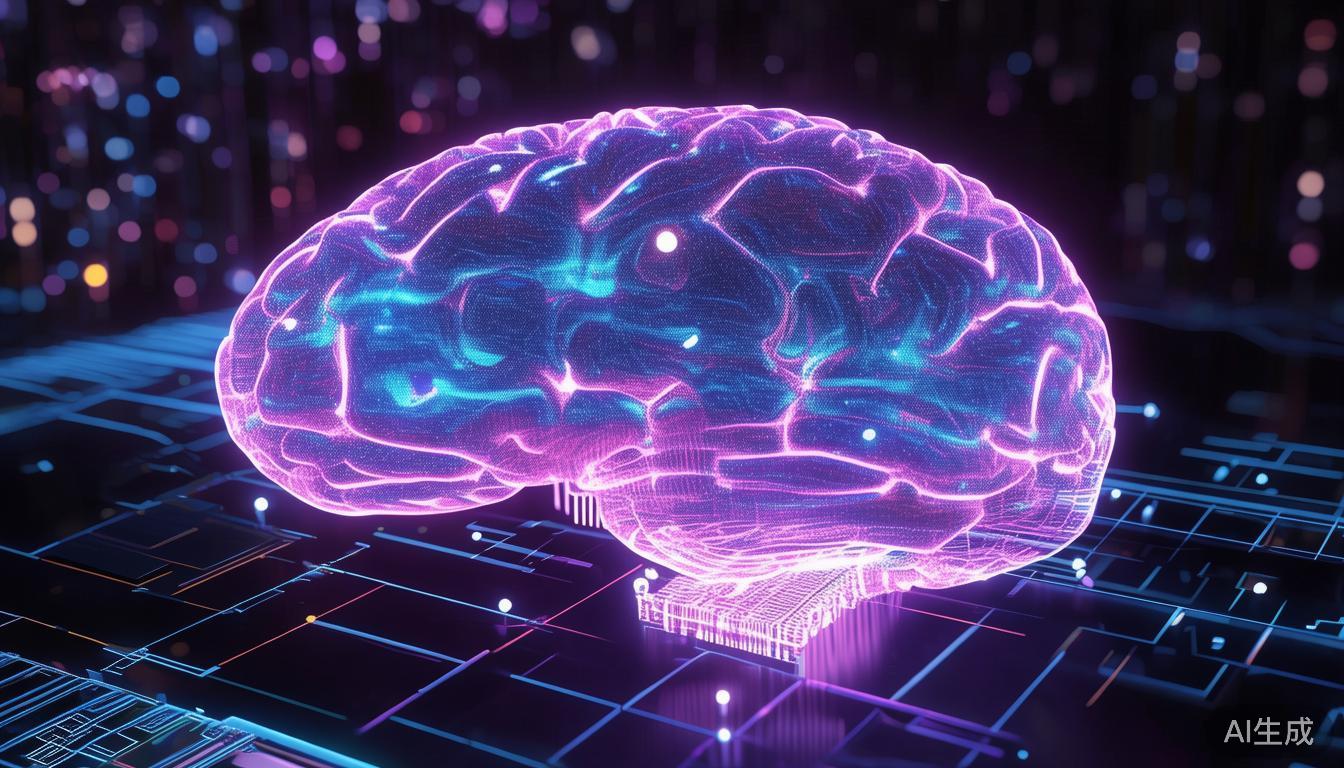
揭开大脑奥秘:一种神经芯片解码脑区交互
人类大脑以其惊人的复杂性,仍然是科学领域中最神秘的前沿之一。尽管经过数十年的研究,理解大脑不同区域如何沟通和交互以产生思维、情感和运动,仍然是一项艰巨的挑战。然而,洛桑联邦理工学院(EPFL)研究人员的一项突破性发展正在推动神经科学的前沿。通过创造一种能够解码脑区交互的神经芯片,科学家们正一步步揭开大脑的奥秘。这项创新不仅有望彻底改变我们对神经功能的理解,还为治疗神经系统疾病开辟了新的途径。
大脑如网络:复杂交互的交织
在深入探讨神经芯片的具体细节之前,理解大脑的极端复杂性至关重要。人类大脑由数十亿个神经元组成,每个神经元通过突触连接到数千个其他神经元。这些连接形成复杂的网络,使不同区域能够沟通和协调其活动。例如,当你决定拿起一个杯子时,前额叶皮层的神经元会启动计划,而运动皮层的神经元会执行运动。但这些区域是如何“交流”的?它们如何同步其活动以产生连贯的动作?
传统上,研究人员依赖于fMRI(功能性磁共振成像)和EEG(脑电图)等技术来研究大脑活动。虽然这些方法提供了宝贵的见解,但它们缺乏捕捉单个神经元和脑区之间动态交互所需的分辨率和精确度。例如,fMRI测量与神经活动相关的血流变化,提供广泛的概述但空间分辨率差。另一方面,脑电图记录头皮上的电活动,提供高时间分辨率但空间精确度有限。
神经芯片:神经分析的新工具
现在引入神经芯片,这是一种直接与大脑接口的小型设备。由以Benoit Delbeuck教授为首的研究团队开发,该芯片能够以前所未有的精度记录和刺激神经活动。该芯片由微电极组成,可以检测单个神经元甚至协同工作的神经元群体产生的电信号。
使该芯片与众不同的是,它不仅能解码单个信号,还能解码不同脑区之间交互的模式。通过分析这些模式,研究人员可以深入了解大脑如何处理信息以及如何协调其活动。例如,该芯片可以帮助识别哪些区域参与了特定任务,以及它们如何相互沟通以执行这些任务。
神经芯片的工作原理
神经芯片通过实时记录神经元的电活动来工作。芯片上的每个微电极都设计用于检测与神经元放电相关的电压变化。通过分析来自多个电极的信号,该芯片可以重建整个脑区的活动模式。
以下是该芯片如何工作的简化示例:
# 分析神经活动模式的示例代码片段
def analyze_neural_signals(signals):
    # 归一化信号
    normalized_signals = normalize(signals)

    # 识别交互模式
    interaction_patterns = detect_patterns(normalized_signals)

    # 将模式映射到脑区
    region_map = map_patterns_to_regions(interaction_patterns)

    return region_map

def normalize(signals):
    # 将信号归一化到统一尺度
    return (signals - min(signals)) / (max(signals) - min(signals))

def detect_patterns(signals):
    # 使用机器学习算法检测交互模式
    # 这可能涉及聚类、时间序列分析等
    return pattern_detector(signals)

def map_patterns_to_regions(patterns):
    # 将检测到的模式映射到特定脑区
    # 这可能基于已知的解剖学相关性
    return region_mapping(patterns)
虽然实际实现远比这复杂,但这个示例说明了芯片功能的基本原理。通过分析神经活动的模式,研究人员可以深入了解大脑不同区域如何交互和协调其活动。
应用与影响
神经芯片的潜在应用非常广泛,涵盖神经科学、医学、人工智能和机器人等多个领域。以下是这项技术可能产生重大影响的关键领域:
1. 神经系统疾病:该芯片可以帮助研究人员理解阿尔茨海默病、帕金森病和癫痫等神经系统疾病的潜在机制。通过分析脑区之间的交互,科学家可以识别与这些疾病相关的特定神经模式。这些知识可能导致更有效的治疗方法,例如靶向药物疗法或深部脑刺激。
2. 脑机接口(BCI):脑机接口是允许人们使用脑活动控制计算机或其他设备的系统。神经芯片可以通过提供更精确和可靠的神经信号来增强BCI的性能。这对于患有瘫痪或其他运动障碍的人来说尤其有益,使他们能够更有效地与周围环境沟通和互动。
3. 人工智能:对脑活动的研究可能启发人工智能的新方法。通过理解大脑如何处理信息和学习,研究人员可以开发更先进的神经网络和算法。神经芯片可以作为测试和改进这些算法的工具,从而带来更智能和适应性更强的AI系统。
4. 机器人技术:该芯片也可以通过使机器人能够更有效地学习和适应来彻底改变机器人技术领域。通过研究大脑如何协调其活动,研究人员可以开发能够以更高精度和灵活性执行复杂任务的机器人。
伦理考量
鉴于其强大的功能,神经芯片也引发了重要的伦理考量。隐私、知情同意和潜在滥用等问题需要仔细解决。例如,如果芯片可以解码思想和情绪,我们如何确保这些信息被负责任地使用?谁应该有权访问这些数据,以及如何保护它们免受未经授权的使用?
此外,人们还担心将神经设备植入大脑的长期影响。虽然该芯片设计为微创,但任何医疗程序都存在风险。研究人员需要进行广泛的测试,以确保该芯片对人类使用是安全有效的。
总结
EPFL研究人员开发的神经芯片代表了我们研究大脑能力的重大飞跃。通过解码脑区交互,这项技术有望彻底改变我们对神经功能的理解,并为治疗神经系统疾病开辟新的途径。虽然必须仔细解决伦理考量,但潜在的好处是巨大的。随着我们继续探索神经科学的前沿,像神经芯片这样的工具将在揭开大脑奥秘和改善人类健康与福祉方面发挥关键作用。
Unveiling the Brain's Secrets: A Neural Chip Decodes Interactions Between Regions
The human brain, with its staggering complexity, remains one of the most enigmatic frontiers of science. Despite decades of research, understanding how different regions of the brain communicate and interact to produce thought, emotion, and movement remains a formidable challenge. However, a groundbreaking development by researchers at the École Polytechnique Fédérale de Lausanne (EPFL) is pushing the boundaries of neuroscience. By creating a neural chip capable of decoding interactions between brain regions, scientists are one step closer to unraveling the brain's mysteries. This innovation not only promises to revolutionize our understanding of neural function but also opens new avenues for treating neurological disorders.
The Brain as a Network: A Complex Web of Interactions
Before diving into the specifics of the neural chip, it's essential to grasp the sheer complexity of the brain. The human brain consists of billions of neurons, each connected to thousands of others through synapses. These connections form intricate networks that allow different regions to communicate and coordinate their activities. For example, when you decide to pick up a cup, neurons in your prefrontal cortex initiate the plan, while neurons in your motor cortex execute the movement. But how do these regions "talk" to each other? How do they synchronize their activities to produce a seamless action?
Traditionally, researchers have relied on techniques like fMRI (functional Magnetic Resonance Imaging) and EEG (Electroencephalography) to study brain activity. While these methods provide valuable insights, they lack the resolution and precision needed to capture the dynamic interactions between individual neurons and brain regions. fMRI, for instance, measures blood flow changes associated with neural activity, providing a broad overview but with poor spatial resolution. EEG, on the other hand, records electrical activity on the scalp, offering high temporal resolution but limited spatial precision.
The Neural Chip: A New Tool for Neural Analysis
Enter the neural chip, a small device designed to interface directly with the brain. Developed by a team of researchers led by Prof. Benoit Delbeuck, the chip is capable of recording and stimulating neural activity with unprecedented precision. The chip, made up of microelectrodes, can detect the electrical signals produced by individual neurons and even groups of neurons working together.
What sets this chip apart is its ability to decode not just individual signals but also the patterns of interactions between different brain regions. By analyzing these patterns, researchers can gain insights into how the brain processes information and coordinates its activities. For example, the chip can help identify which regions are involved in specific tasks and how they communicate with each other to perform those tasks.
How the Neural Chip Works
The neural chip operates by recording the electrical activity of neurons in real-time. Each microelectrode on the chip is designed to detect the voltage changes associated with neural firing. By analyzing the signals from multiple electrodes, the chip can reconstruct the activity patterns of entire brain regions.
Here's a simplified example of how the chip might work:
# Example code snippet for analyzing neural activity patterns
def analyze_neural_signals(signals):
    # Normalize the signals
    normalized_signals = normalize(signals)

    # Identify patterns of interaction
    interaction_patterns = detect_patterns(normalized_signals)

    # Map patterns to brain regions
    region_map = map_patterns_to_regions(interaction_patterns)

    return region_map

def normalize(signals):
    # Normalize the signals to a common scale
    return (signals - min(signals)) / (max(signals) - min(signals))

def detect_patterns(signals):
    # Use machine learning algorithms to detect interaction patterns
    # This could involve clustering, time-series analysis, etc.
    return pattern_detector(signals)

def map_patterns_to_regions(patterns):
    # Map detected patterns to specific brain regions
    # This could be based on known anatomical correlations
    return region_mapping(patterns)
While the actual implementation is far more complex, this example illustrates the basic principles behind the chip's functionality. By analyzing the patterns of neural activity, researchers can gain insights into how different regions of the brain interact and coordinate their activities.
Applications and Implications
The potential applications of the neural chip are vast and span multiple fields, from neuroscience and medicine to artificial intelligence and robotics. Here are a few key areas where this technology could make a significant impact:
1. Neurological Disorders: The chip could help researchers understand the underlying mechanisms of neurological disorders like Alzheimer's, Parkinson's, and epilepsy. By analyzing the interactions between brain regions, scientists could identify the specific neural patterns associated with these conditions. This knowledge could lead to the development of more effective treatments, such as targeted drug therapies or deep brain stimulation.
2. Brain-Computer Interfaces (BCIs): BCIs are systems that allow people to control computers or other devices using their brain activity. The neural chip could enhance the performance of BCIs by providing more precise and reliable neural signals. This could be particularly beneficial for individuals with paralysis or other motor disabilities, enabling them to communicate and interact with their environment more effectively.
3. Artificial Intelligence: The study of brain activity could inspire new approaches to artificial intelligence. By understanding how the brain processes information and learns, researchers could develop more advanced neural networks and algorithms. The neural chip could serve as a tool for testing and refining these algorithms, leading to more intelligent and adaptable AI systems.
4. Robotics: The chip could also revolutionize the field of robotics by enabling robots to learn and adapt more effectively. By studying how the brain coordinates its activities, researchers could develop robots that can perform complex tasks with greater precision and flexibility.
Ethical Considerations
With such powerful capabilities, the neural chip also raises important ethical considerations. Issues such as privacy, consent, and the potential for misuse need to be carefully addressed. For example, if the chip can decode thoughts and emotions, how can we ensure that this information is used responsibly? Who should have access to this data, and how can it be protected from unauthorized use?
Additionally, there are concerns about the long-term effects of implanting neural devices in the brain. While the chip is designed to be minimally invasive, any medical procedure carries risks. Researchers will need to conduct extensive testing to ensure that the chip is safe and effective for human use.
Takeaway
The development of the neural chip by researchers at EPFL represents a significant leap forward in our ability to study the brain. By decoding interactions between brain regions, this technology promises to revolutionize our understanding of neural function and open new avenues for treating neurological disorders. While ethical considerations must be carefully addressed, the potential benefits are immense. As we continue to explore the frontiers of neuroscience, tools like the neural chip will play a crucial role in unraveling the brain's mysteries and improving human health and well-being.