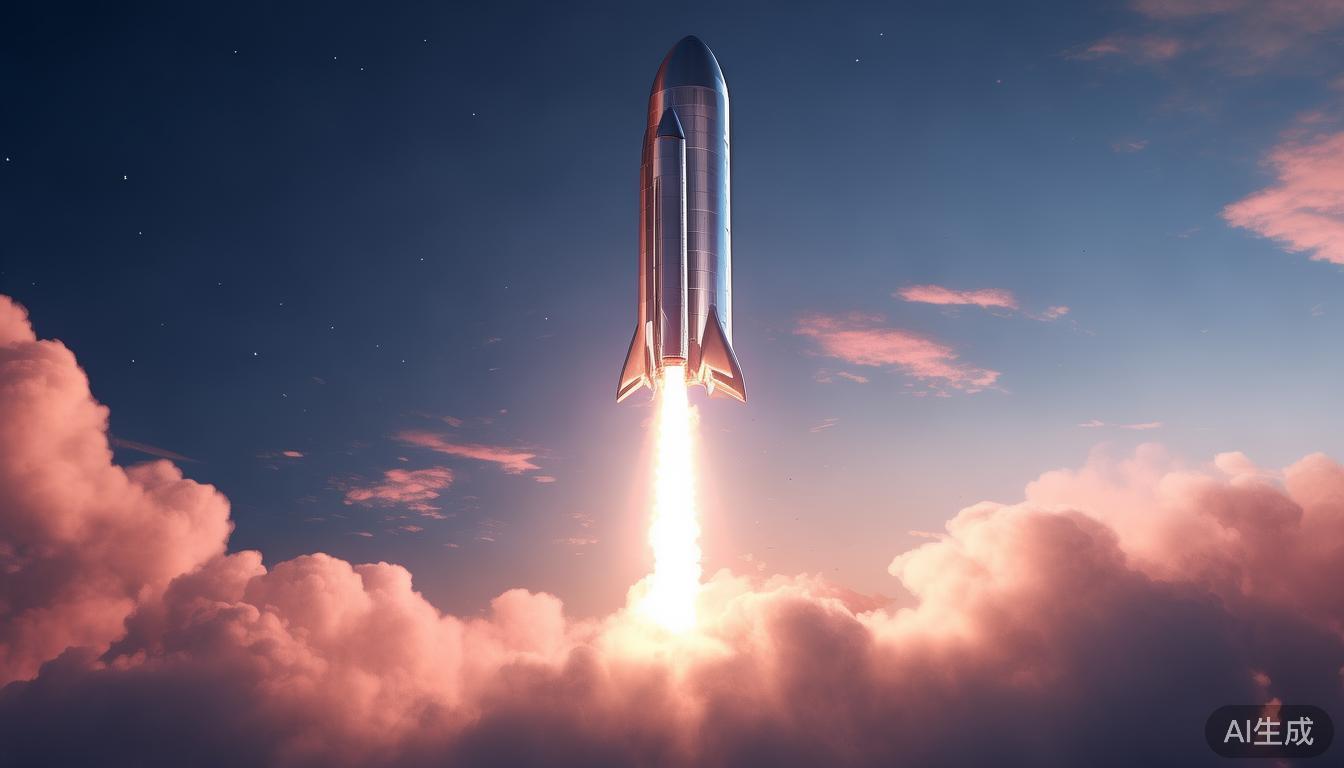
SpaceX星舰:历史性飞跃入轨
太空探索始终是人类智慧与不懈探索未知的见证。今天,SpaceX以星舰飞船首次发射入轨,标志着一项里程碑式的成就。这一全球直播的事件,令爱好者和专家们屏息以待,它不仅代表了一项技术突破,更是一个关键步骤,预示着未来太空将比以往任何时候都更加触手可及。
星舰:不止于火箭
星舰,常被称为"超级火箭",并非寻常的航天器。由埃隆·马斯克及其SpaceX团队设计,它是一种完全可重复使用的航天系统,旨在将人类和货物送往地球轨道、月球、火星及更远的地方。与它的前辈猎鹰9号和猎鹰重型火箭不同,星舰被设计为一种完全集成的系统,包含载人航天器和超重型运载火箭。
星舰的设计理念根植于可重复使用和成本降低。通过让助推器和航天器使用相同的核心组件,SpaceX旨在大幅降低进入太空的成本。这是通过快速周转时间和具备多次着陆及加注助推器的能力来实现的。
首次入轨:严峻的考验
9月28日的发射并非寻常的测试飞行。它是多年开发、多次地面测试和一系列日益雄心勃勃的测试飞行的结晶。本次任务的主要目标是展示星舰达到轨道并安全返回的能力。
发射本身是一场壮观的景象。超重型助推器以其惊人的规模和威力点燃发动机升空,在身后留下敬畏与激动的轨迹。航天器在起飞后不久与助推器分离,继续其入轨之旅,并执行了一系列机动,以确保能够安全返回。
技术壮举
这项成就之所以尤为非凡,在于所涉及系统的复杂性。星舰依赖于一系列先进技术,包括:
- 猛禽发动机(Raptor Engines):这些是有史以来建造的最强大的火箭发动机。每个猛禽发动机可产生超过50万磅的推力,为将庞大的星舰系统送入轨道提供必要的动力。
- 完全可重复使用设计:能够重复使用助推器和航天器是一项变革性的技术。它通过数个数量级的成本降低,使太空进入变得更加可行,为政府和商业实体提供了更多可能。
- 自主系统:星舰配备了复杂的自主系统,使其能够在无人干预的情况下导航、转向和着陆。这对于确保安全性和可靠性至关重要,尤其是在无人飞行任务中。
对太空探索的影响
星舰入轨的成功对太空探索的未来具有深远影响。以下是这项成就将在几个关键领域产生重大影响的几个方面:
- 火星殖民:星舰的设计目标是将人类送往火星。凭借其运载大型有效载荷的能力和完全可重复使用的设计,它是执行这项艰巨任务的理想工具。
- 商业航天飞行:太空进入成本的降低将开辟商业航天飞行的全新机遇。现在,企业可以梦想发射更大型的卫星、开展太空旅游,甚至建立太空站。
- 科学研究:有了更经济、更可靠的进入轨道的方式,科学研究将受益匪浅。新的望远镜、实验和研究任务将成为可能,推动我们对宇宙的认知边界。
前路漫漫
尽管取得了这一历史性成就,但仍有许多工作要做。SpaceX将继续改进和测试星舰,以确保其可靠性和安全性。未来的任务将涉及更复杂的机动、更高的速度,最终实现载人飞行。
结语
SpaceX星舰首次入轨不仅是技术上的胜利,更是人类雄心和对太空探索无限潜力的象征。这一里程碑开启了新的可能时代,从火星殖民到更可及、更可持续的航天产业。当我们仰望星空时,有一件事是明确的:太空探索的未来已经到来,它正由创新、决心和对探索宇宙最远边疆的梦想塑造。
SpaceX's Starship: A Historic Leap into Orbit
Space exploration has always been a testament to human ingenuity and the relentless pursuit of the unknown. Today, SpaceX marks a monumental milestone with the first-ever launch of its Starship spacecraft into orbit. This event,直播 globally and followed with bated breath by enthusiasts and experts alike, represents not just a technical achievement but a pivotal step toward a future where space becomes more accessible than ever before.
The Starship: More Than Just a Rocket
Starship, often referred to as the "megarocket," is no ordinary spacecraft. Designed by Elon Musk and his team at SpaceX, it is a fully reusable spacecraft system intended to carry humans and cargo to Earth orbit, the Moon, Mars, and beyond. Unlike its predecessors, the Falcon 9 and Falcon Heavy, Starship is designed to be a fully integrated system with a crew-carrying spacecraft and a super heavy-lift launch vehicle.
The design philosophy behind Starship is rooted in reusability and cost reduction. By using the same core components for both the booster and the spacecraft, SpaceX aims to drastically lower the cost of accessing space. This is achieved through rapid turnaround times and the ability to land and refuel the booster multiple times.
The First Orbit: A Test of Mettle
The September 28th launch was not just any test flight. It was the culmination of years of development, numerous ground tests, and a series of increasingly ambitious test flights. The primary goal of this mission was to demonstrate the ability of Starship to reach orbit and then safely return.
The launch itself was a spectacle. The super heavy-lift booster, with its sheer scale and power, ignited the engines and rose into the sky, leaving a trail of awe and excitement in its wake. The spacecraft separated from the booster shortly after liftoff, continued its journey into orbit, and then executed a series of maneuvers to ensure it could safely return.
The Technical Feat
What makes this achievement particularly remarkable is the complexity of the systems involved. Starship relies on a suite of advanced technologies, including:
- Raptor Engines: These are the most powerful rocket engines ever built. Each Raptor engine can generate over 500,000 pounds of thrust, providing the necessary power to lift the massive Starship system into orbit.
- Fully Reusable Design: The ability to reuse both the booster and the spacecraft is a game-changer. It reduces the cost of space access by orders of magnitude, making space travel more feasible for both government and commercial entities.
- Autonomous Systems: Starship is equipped with sophisticated autonomous systems that allow it to navigate, steer, and land without human intervention. This is crucial for ensuring safety and reliability, especially during uncrewed missions.
The Impact on Space Exploration
The success of Starship's orbit insertion has far-reaching implications for the future of space exploration. Here are a few key areas where this achievement will make a significant impact:
- Mars Colonization: Starship is designed with the ultimate goal of sending humans to Mars in mind. With its ability to carry large payloads and its fully reusable design, it is the ideal vehicle for such a monumental task.
- Commercial Spaceflight: The lower cost of access to space will open up new opportunities for commercial spaceflight. Companies can now dream of launching larger satellites, conducting space tourism, and even setting up space stations.
- Scientific Research: With a more affordable and reliable way to reach orbit, scientific research will benefit immensely. New telescopes, experiments, and research missions will become feasible, pushing the boundaries of our knowledge of the universe.
The Road Ahead
Despite this historic achievement, there is still much work to be done. SpaceX will continue to refine and test Starship to ensure its reliability and safety. Future missions will involve more complex maneuvers, higher speeds, and eventually, crewed flights.
Takeaway
SpaceX's Starship reaching orbit for the first time is more than just a technical triumph; it is a symbol of human ambition and the boundless potential of space exploration. This milestone opens up a new era of possibilities, from Mars colonization to a more accessible and sustainable space industry. As we look to the stars, one thing is clear: the future of space exploration is here, and it is being shaped by innovation, determination, and a dream of reaching the farthest frontiers of our universe.